
Skip to content
Thrive4Life

Awareness campaign

Diabetes Awareness

Diabetes is one of the most common long-term conditions in the UK, and many people live with it, or with a high risk of it, without knowing. Our campaign helps your people understand the types of diabetes, recognise the symptoms that are easy to miss, know their risk, and make everyday changes that keep blood sugar in a healthy range. Ideal for World Diabetes Day on 14 November, or at any time of year.

People living with diabetes in the UK (2024)
5.6 million
Of them, the share with type 2 diabetes
Around 90%
For those at risk, the reduction in risk of type 2 diabetes from losing 5–10% of body weight
Around 60%

At your premises

The Diabetes Awareness pop-up stand

Where
On site, at your premises
How long
Half a day to five days
Who
Manned by the Thrive4Life team

Our team runs a friendly, informative stand where your people can drop by, ask questions and pick up practical information about diabetes and blood sugar. Some people have no symptoms at all in the early stages, so the stand is as much for those who feel perfectly well as for anyone with a concern.

What is on the stand

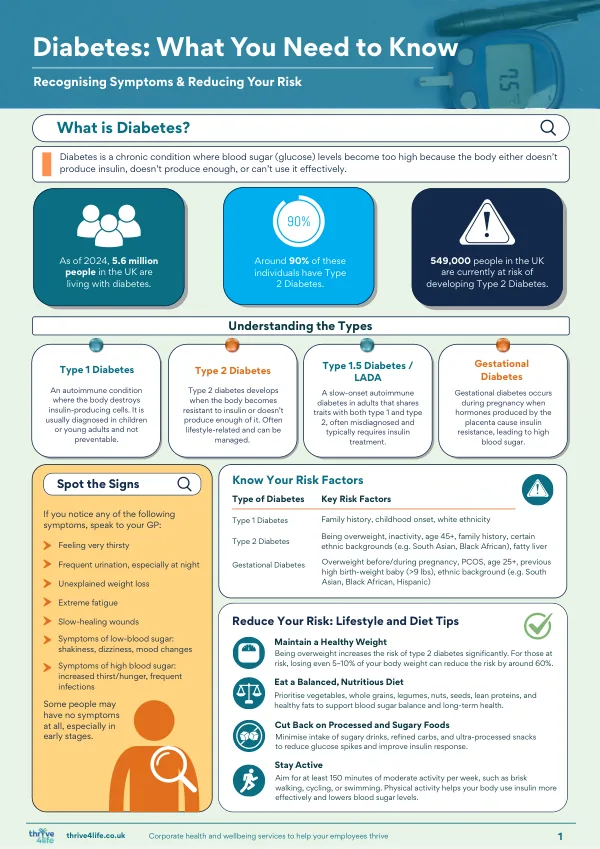
  • "Diabetes: What You Need to Know" fact sheet: the types of diabetes, the symptoms to look out for, the risk factors and practical ways to reduce your risk, on a single page.
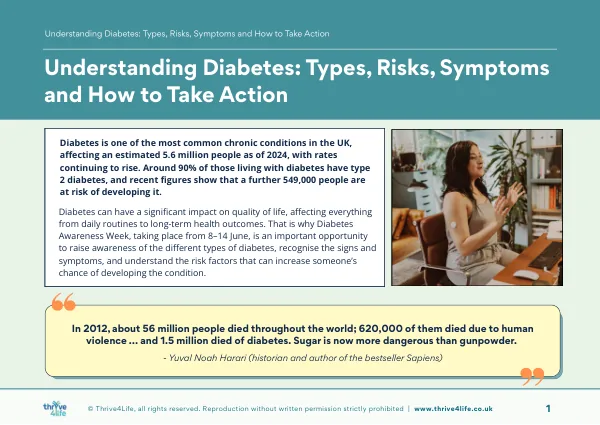
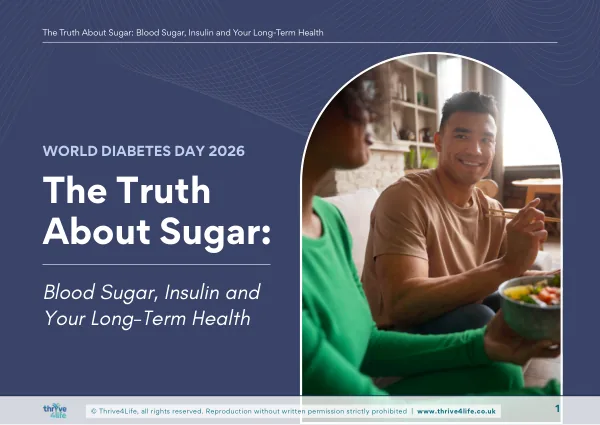
  • Campaign newsletters: Understanding Diabetes and The Truth About Sugar, in print and to share digitally.
  • Conversations about risk: what raises the risk of type 2 diabetes, which symptoms are worth a visit to the GP, and where to check your own risk.
  • The webinar recording with Professor Ketan Dhatariya, playing on the stand and shared afterwards for anyone who could not make it.
  • Signposting to the NHS and to trusted diabetes charities for further information and support.

Want your people to know their numbers? Combine the campaign with our employee health checks, which include blood sugar alongside blood pressure and cholesterol.

Five members of the Thrive4Life team smiling in front of their pop-up stand
The Thrive4Life team on a campaign pop-up stand.

Expert-led webinar

The Secret Symptoms and Hidden Dangers of Diabetes

Recorded for World Diabetes Day, this webinar is presented by one of the UK's leading diabetes experts, Professor Ketan Dhatariya: a full-time NHS clinician and Chair of the Joint British Diabetes Societies Inpatient Care Group. It explains the symptoms of diabetes that are easily overlooked, and the dangers of leaving the condition undiagnosed or poorly managed.

Your people can watch it on the stand, or in their own time whenever suits them.

Related talks

The campaign can also include a live talk, such as Nutrition and Blood Sugar Balance with nutritionist Lissa Leader, or our webinar on the numbers that matter for long-term health:

Key messages

What your people take away

Diabetes is a long-term condition in which blood sugar (glucose) levels become too high, because the body does not produce insulin, does not produce enough, or cannot use it effectively.

The types of diabetes

Type 1

An autoimmune condition in which the body destroys its insulin-producing cells. Usually diagnosed in children or young adults, and not preventable.

Type 2

Develops when the body becomes resistant to insulin or does not produce enough of it. Often linked to lifestyle, and can be managed.

Gestational

Occurs during pregnancy, when hormones from the placenta cause insulin resistance and raise blood sugar.

Type 1.5 (LADA)

A slow-onset autoimmune diabetes in adults, sharing traits with types 1 and 2. Often misdiagnosed, and typically needs insulin.

Spot the signs

Anyone who notices any of these should speak to their GP:

  • Feeling very thirsty
  • Needing to urinate often, especially at night
  • Unexplained weight loss
  • Extreme tiredness
  • Wounds that are slow to heal
  • Frequent infections

Some people have no symptoms at all, especially in the early stages.

Reduce your risk of type 2 diabetes

  • Maintain a healthy weight. For those at risk, losing even 5–10% of body weight can reduce the risk by around 60%.
  • Eat a balanced, nutritious diet. Prioritise vegetables, whole grains, legumes, nuts, seeds, lean proteins and healthy fats.
  • Stay active. Aim for at least 150 minutes of moderate activity a week, such as brisk walking, cycling or swimming.
  • Cut back on processed and sugary foods. Fewer sugary drinks, refined carbohydrates and ultra-processed snacks.

Campaign resources

Written by Thrive4Life, printed on the stand and shared digitally

Fact sheet · 1 page

Diabetes: What You Need to Know

Recognising symptoms and reducing your risk: the types of diabetes, the signs, the risk factors and practical lifestyle and diet tips.

View the fact sheet (PDF)

Newsletter · 16 pages

Understanding Diabetes: Types, Risks, Symptoms and How to Take Action

The different forms of diabetes and how each is treated, who is most at risk, the symptoms to watch for, and the practical steps that make a difference.

View the newsletter (PDF)

Newsletter · 12 pages

The Truth About Sugar: Blood Sugar, Insulin and Your Long-Term Health

How blood sugar works, the vital role of insulin, how everyday food choices affect energy and long-term health, and simple ways to support healthier blood sugar.

View the newsletter (PDF)

Book the Diabetes Awareness campaign

Run it on its own, or combine it with our other campaigns into one fully managed event. Tell us when, where and for how long, from half a day to five days, and we will put together a plan and a quote.

Or call 020 8972 9675 · See all our campaigns