



Why Sponsoring Men’s Health Matters Is More Than Brand Visibility - It Is Leadership
There are moments when corporate support becomes more than sponsorship.
It becomes leadership.
That is what Men’s Health Matters offers.
This campaign arrives at a nationally significant moment. With the publication of England’s first Men’s Health Strategy for 2025 to 2035, men’s health has been recognised as a major public health priority. Employers, workplaces, communities, sport and wider society are now being clearly identified as part of the solution.
For corporates, this creates a powerful opportunity.
Sponsoring Men’s Health Matters is not simply about placing a logo beside a campaign. It is about standing visibly behind a message that matters: men’s health belongs in the workplace conversation, prevention matters, early action matters, and no employee should feel that health is something to hide or delay until crisis point.
This is where sponsorship gains its real gravitas.
Yes, sponsors receive brand visibility. That matters. Visibility helps show the wider market what an organisation stands for. But the deeper value is this: by sponsoring, organisations help open conversations, encourage action and support a campaign with the potential to improve lives.
A campaign with depth, reach and purpose
Men’s Health Matters is not a lightweight awareness session or a one-off event. It has been built with depth, longevity and purpose.
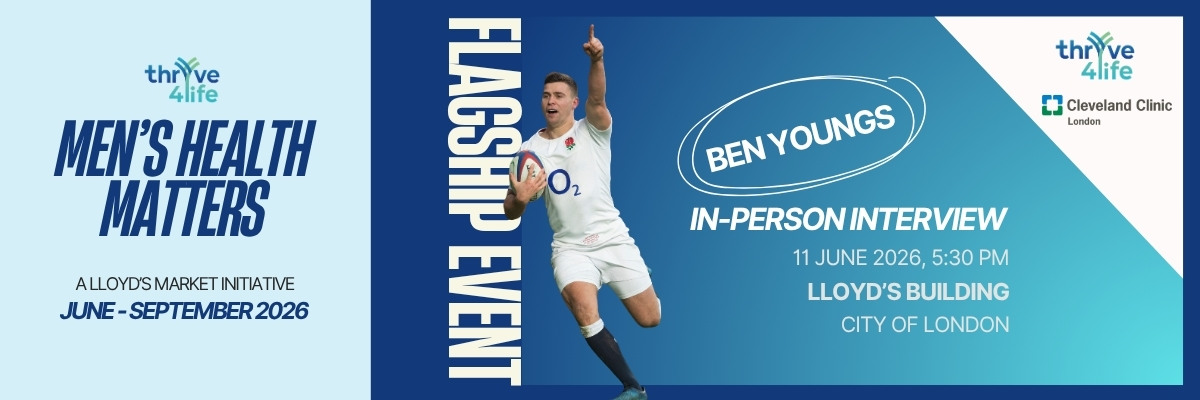
The campaign launches at Lloyd’s on 11 June 2026 with an in-person interview with Ben Youngs, England’s most-capped men’s rugby player. Ben’s story brings together heart health, pressure, resilience and the importance of taking early action.
That live interview will be filmed and streamed the following week, allowing organisations to share it widely with employees and wider audiences.
The Ben Youngs interview then becomes the springboard for the Men’s Health Matters Live Streamed Webinar Series, delivered week by week through June and July. Led by expert clinical and wellbeing voices, including specialists from Cleveland Clinic London, the series will cover key areas of men’s health, including heart health, cancer awareness, mental health, stress, prevention and knowing when to seek help.
All streamed content will be available free of charge to anyone who would like to watch, with recordings available on demand for two months.
That means sponsor support does not fund a closed room or a private moment. It helps create an open, accessible campaign with reach across workplaces, the City and beyond.
To make participation simple, Thrive4Life also provides sponsors with professionally prepared marketing collateral, including campaign copy, visuals and promotional materials. This helps organisations promote their involvement internally and externally with confidence and ease.
Because meaningful education and practical support often begin with one powerful moment of attention.
And sponsors help make that moment possible.
The 360-degree value of sponsorship
Sponsorship of Men’s Health Matters sits across several important corporate agendas: employee wellbeing, prevention, inclusion, leadership, brand visibility, ESG, CSR, market positioning, community recognition and social impact.
For HR and wellbeing teams, it gives employees access to high-quality, expert-led health content and demonstrates visible support for prevention, early intervention and mental health.
For marketing, brand and leadership teams, it provides credible association with a high-profile City campaign based at Lloyd’s, linked with Ben Youngs, Cleveland Clinic London and a meaningful workplace health agenda.
For senior leaders, it is a clear opportunity to show that health and wellbeing are not peripheral issues, but part of a responsible and forward-looking workplace culture.
This is the 360-degree value of sponsorship: brand visibility, credible association, employee engagement, goodwill, market positioning and meaningful social impact.
Most importantly, it helps make people pay attention.
In a busy workplace, attention is precious. When a respected employer puts its name behind a campaign like this, it sends a powerful message.
It says this matters.
It says prevention matters.
It says men’s health belongs firmly within the workplace conversation.
That kind of leadership has weight.
It has meaning.
It has gravitas.
Sponsorship becomes leadership when it drives real conversations, real engagement and real change.
A timely invitation to corporate leadership
There are campaigns that ask for support because they need visibility.
This campaign asks for support because the message deserves to be carried further.
We are deeply grateful to the organisations already standing with us: The Hartford, Antares, Lockton, Insurance Families Network (IFN), Harrison Holgate, GPM Development and Thomas Miller. Their support is helping bring Men’s Health Matters to life and carry an important message into workplaces across the City and beyond.
But there is still time for other organisations to step forward.
The campaign infrastructure is in place. The event is ready. The streamed programme is ready. The clinical expertise is in place. The audience is growing. The message is clear.
This is a moment for corporate leadership.
A moment to move beyond polite agreement and into visible action.
A moment to help create the spark that starts conversations, carries them forward and turns awareness into action.
If your organisation wants to be visibly associated with a high-profile City campaign that brings men’s health, prevention and early action into the heart of the workplace, we would welcome your support.
Sponsorship opportunities remain available until the end of May 2026.
To discuss sponsorship of Men’s Health Matters, please contact Janice Kaye:
Contact Janice
Lead the Conversation
Men’s health is now on the national agenda. Be visibly associated with a campaign that brings men’s health, prevention and early action into the workplace.
Support Men’s Health Matters and position your organisation alongside a credible, timely campaign focused on prevention, early action and better engagement with men’s health.
Categories
